Live sauerkraut for better mood and immune system
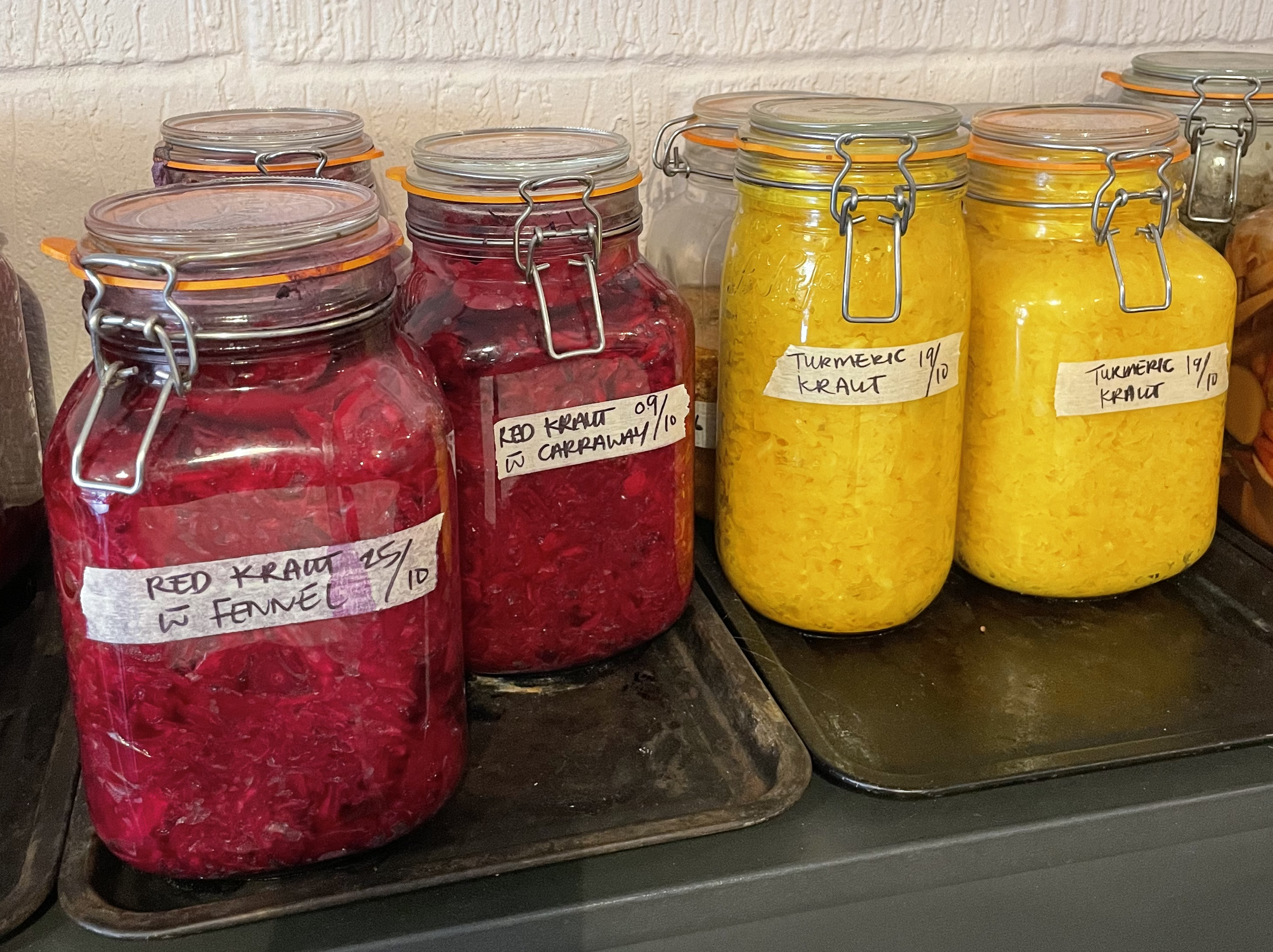
Aren’t these beautiful? Beetroot and turmeric added to cabbage krauts at Helma vegetarian cafe, my favourite place for gut-healthy breakfast in east London.
Fermented cabbage – that’s what sauerkraut is. Eaten and enjoyed across countries in Eastern Europe from Germany to Poland and Russia for centuries and now gaining popularity in British homes. With its tangy taste and crunch, you can spoon it through bagged salads, sprinkle it on soups, serve alongside stews in winter, or decant into a small bowl as a healthy snack or starter.
What exactly are the health benefits of sauerkraut?
Boosts vitamin C
Cabbage is naturally high in vitamin C. Great. Even better is that fermenting cabbage accelerates the vitamin C content so there is more than when you just eat the regular raw one. It’s cabbage on steroids. It’s interesting that until the 1950s many people didn’t have fridges so had to ferment vegetables to preserve them to eat in winter when fresh ones were scarce. Sauerkraut which is super high in vitamin C would have prevented people getting scurvy (which can lead to your teeth falling out and connective tissues in the body falling apart). The high vitamin C content could play a role in supporting your immune system and therefore help protect you from colds in winter.
Boosts mood
When cabbage ferments it produces an array of beneficial probiotic bacteria – as many as 30 different ones. Your gut bacteria known as the microbiome, LOVE variety. So when you eat it, you parachute lots of these good bugs into your gut. This could help keep your digestive system healthy, and may even improve your mood and cognition as the bacteria and the substances they produce are thought to send messages along the telephone wire which is your vagus nerve to your brain.
Cautions
Don’t go mad with mountains of sauerkraut on the first week. If you haven’t had fermented live foods in a long time, it may take a few weeks for the bacteria in your gut to accept the colonising bacteria, so start with a teaspoon a day and build up to a dollop. Think about the Romans coming to colonise London. There is usually push back when newcomers arrive and establish a new order.
If you enjoy the taste of sauerkraut and are buying it for health benefits, make sure to choose the ones that are actually fermented (usually sold in a fridge). You’ll know they are fermented and so contain probiotic bacteria if they have the word “live’ on them. Avoid the ones in vinegar as they aren’t live foods, but dead ones.
Ways to enjoy sauerkraut
Melted Gruyere cheese on sourdough toast with a dollop of crispy sauerkraut spooned on top. Recipe HERE
A couple of tablespoons thrown into a salad bowl with a mixed leaf salad and drizzled in extra virgin olive oil and a squeeze of lemon.
A spoonful on top of a hot vegetable soup to garnish and give the first mouthful a little tangy crunch.